Diversification Matters More Than Ever in Today's Markets
Why Spreading Your Money the Right Way Is the Key to Safety and Peace of Mind

There was a time when putting money in a handful of big-name stocks and forgetting about it worked reasonably well. For decades, a simple approach deliver solid results. Buy quality companies, hold for years, watch your wealth grow.
Those days have become harder to rely on.
Today’s markets move faster. Information travels instantly. Trends emerge and disappear in weeks rather than years. Economic relationships that once seemed stable now shift unexpectedly. In this environment, the old playbook—pick a few winners and hope—carries more risk than ever before.
This brings us to diversification: spreading your resources across different types of assets so that a single negative event cannot devastate your entire portfolio.
For modern investors, diversification is not optional anymore. It is essential.
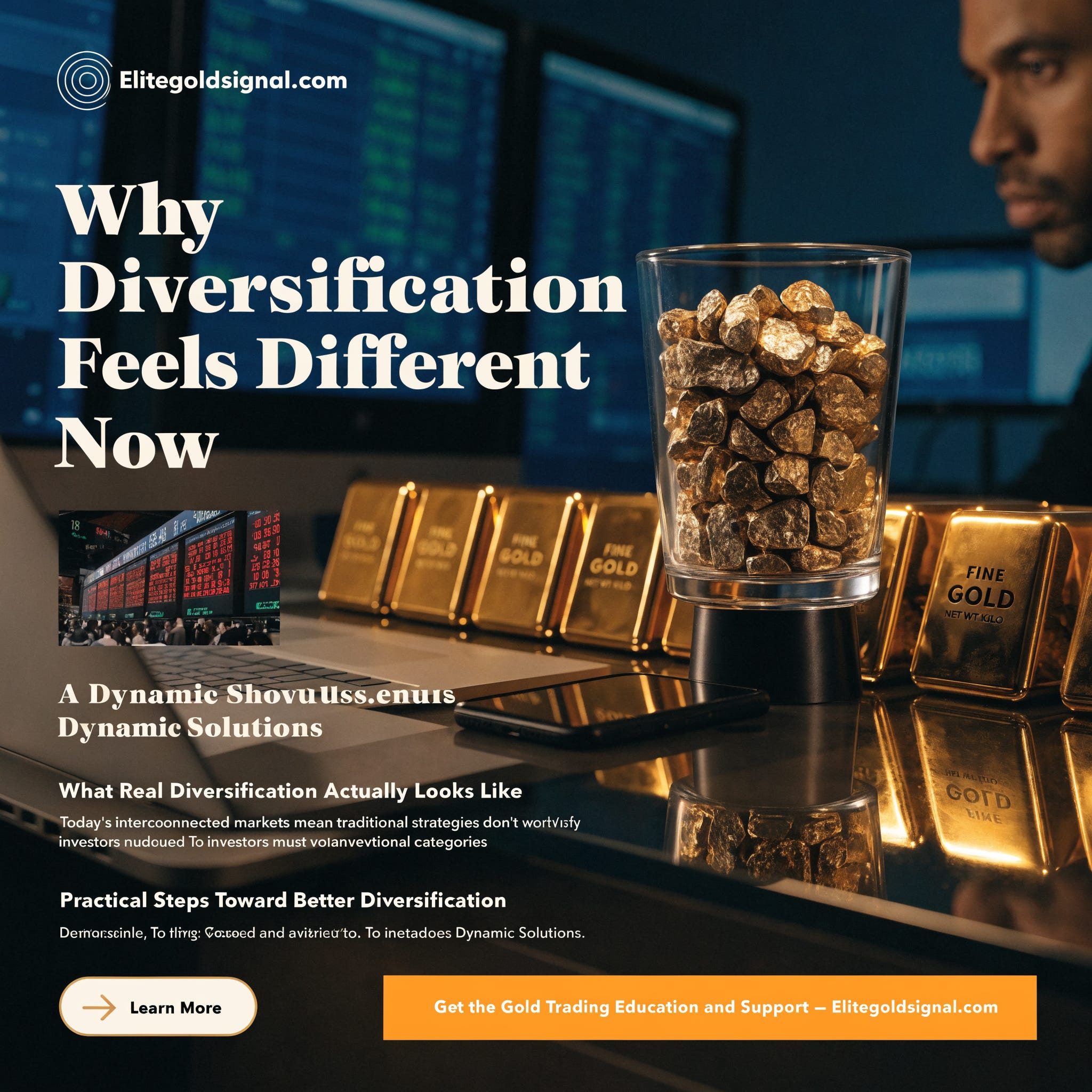
Get the Gold Trading Education and Support - Elitegoldsignal.com
Why Diversification Feels Different Now
The core reason diversification matters more now relates to how interconnected everything has become.
When markets crashed in 2008, nearly everything fell together—banks, real estate, stocks, even some bonds. The assumption that “diversified” meant safe proved painfully incorrect. Correlations increased when investors needed protection most.
Since then, markets have continued evolving. algorithmic trading executes millions of trades in milliseconds based on programmed triggers. Geopolitical events ripple across borders instantly. What happens in one country’s markets affects others within hours.
The point is simple: events are more connected. Single points of failure become more dangerous. Diversification that actually diversifies—that holds assets performing differently under stress—provides genuine protection in ways that felt less necessary in previous generations.
What Real Diversification Actually Looks Like
Here is what often gets misunderstood: owning fifteen different technology stocks is NOT diversified. All fifteen might fall together if technology declines. You hold different labels but similar exposure.
Real diversification comes from holding assets that genuinely behave differently:
Different asset classes:
Stocks for long-term growth potential
Bonds for stability and income
Real estate for inflation protection and tangible value
Cash equivalents for immediate accessibility
Different geographies:
Domestic markets for familiarity and stability
International markets for broader opportunity
Different risk levels:
More aggressive growth holdings
More conservative defensive positions
Including hard assets:
Gold represents one of the few truly uncorrelated assets available to individual investors. Unlike stocks or bonds, gold’s value does not depend on corporate earnings or interest rates. It derives from centuries of human valuation—a unique characteristic that becomes especially valuable when fear drives markets.
During periods of uncertainty, gold frequently rises while stocks fall. That inverse relationship is precisely what makes diversification effective. When one asset class struggles, another may hold steady or increase.
This dynamic explains why thoughtful investors maintain gold positions even during calm periods—the protection it provides during turbulence justifies holding it continuously.
Practical Steps Toward Better Diversification
Moving from awareness to action does not require becoming a Wall Street expert. Here are practical approaches:
Start with what you already have.
Review your current holdings. Identify whether your exposure clusters in similar areas. If most of your money flows in the same direction during stress, consider rebalancing.
Use diversified funds strategically.
Target date retirement funds and broadly diversified index funds provide instant diversification within asset classes. These simplify the process while maintaining exposure across many holdings.
Add positions gradually.
If your portfolio lacks gold exposure, adding slowly over time reduces timing risk. Dollar-cost averaging into gold positions lets you build gradually without guessing the perfect entry point.
Ignore the noise.
Markets constantly generate headlines designed to provoke emotion. The temptation to abandon diversification during brief periods of poor performance is strong—but that is precisely when discipline matters most.
History consistently shows portfolios maintaining genuine diversification recover more smoothly from turbulence than concentrated positions do.
Building Resilience Into Your Financial Future
Diversification will never make your portfolio perfectly smooth. Some years, you will underperform those who bet everything on the hottest sector. That comes with the territory.
But what diversification DOES provide is survivability. It ensures that a single failure cannot erase decades of building. It allows you to sleep at night during market uncertainty. It gives you staying power when patience becomes the hardest virtue to maintain.
In today’s interconnected markets, that resilience matters more than ever.
And for those interested in exploring gold’s role within a diversified portfolio, learning more helps turn curiosity into informed decisions.